A malfunctioning garage door can be a major inconvenience for any homeowner, disrupting daily routines and compromising home security. When your garage door won’t close, it’s not just frustrating; it can leave your garage vulnerable. This comprehensive guide will help you understand the common reasons why your garage door might be refusing to close and provide actionable steps to troubleshoot and fix these issues, ensuring your garage door operates smoothly and safely once more. We’ll walk you through everything from simple sensor adjustments to more complex mechanical problems, empowering you to address the problem effectively.
Common Reasons Why Your Garage Door Won’t Close
When your garage door won’t close, it can be due to a variety of underlying issues, ranging from minor glitches to significant mechanical failures in Burlington MA. Understanding the most common reasons why your garage door won’t close is the first step in effectively troubleshooting and performing a garage door repair. Many homeowners encounter similar problems, and with a bit of investigation, you can often pinpoint the exact cause of your garage door problem. We will delve into these prevalent issues to help you diagnose why your door doesn’t close properly, enabling you to take appropriate action and prevent the door from remaining open.
Sensor Issues
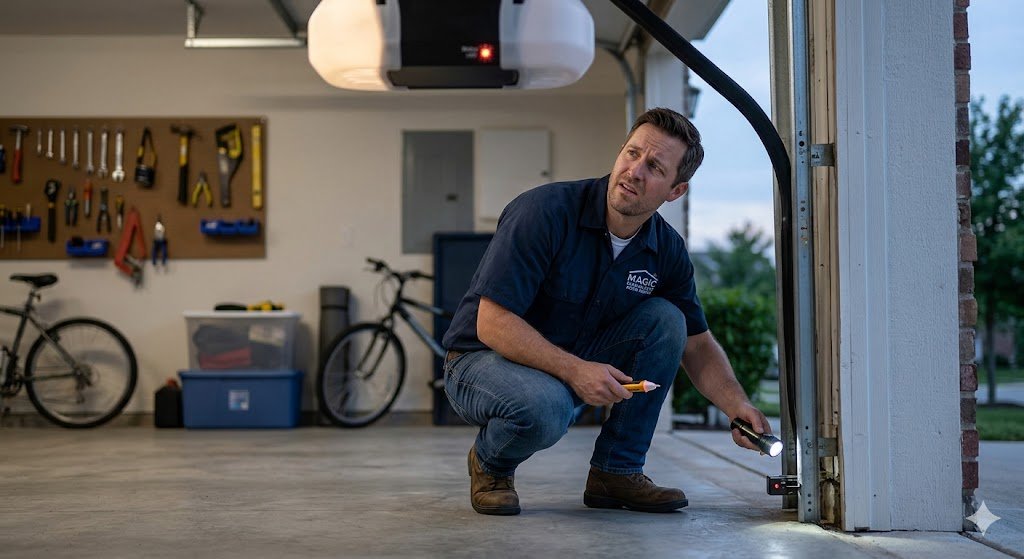
One of the most frequent reasons why your garage door won’t close is an issue with the garage door sensors. These crucial safety devices are located on each side of your garage door, near the bottom, and are designed to detect any obstruction in the door’s path. If the garage door sensors are dirty, misaligned, or blocked, they will prevent the door from closing as a safety measure. You’ll often see a blinking light on your garage door opener or on the sensor itself if there’s a problem. To troubleshoot, ensure nothing is physically blocking the sensor’s beam and clean the lenses thoroughly. If they are misaligned, carefully adjust them until the indicator lights on both sensors glow steadily, signifying they are communicating correctly, allowing the garage door to close.
Misaligned Garage Door Tracks
If your garage door won’t close, another common culprit could be misaligned garage door tracks. The tracks guide the garage door rollers, allowing the door to open and close smoothly. Over time, or due to impact, these tracks can become bent or shift out of alignment, causing the roller to bind and preventing the door from closing properly. When the tracks are misaligned, you might hear grinding noises or notice the garage door struggling to move. Inspect the tracks for any visible bends or gaps where they meet the wall. Attempting to fix heavily damaged or misaligned tracks can be complex and may require specialized tools. If you suspect significantly misaligned tracks are the reason your garage door won’t close, it’s often best to contact a garage door specialist for a professional garage door service to ensure proper alignment and prevent further damage to your garage door.
Broken Garage Door Springs
Broken garage door springs are a serious issue that will almost certainly prevent the door from closing, or even opening, and can be quite dangerous. These powerful springs counterbalance the heavy weight of the garage door, making it possible for the garage door opener to lift and lower it. If a spring breaks, the opener struggles to handle the full weight, and the garage door will either refuse to move or operate with extreme difficulty. You might hear a loud “bang” when a spring breaks, and you’ll likely see a visible gap in the spring itself. Never attempt to fix or replace broken garage door springs yourself, as they are under immense tension and can cause severe injury. If you suspect broken springs are the reason your garage door won’t close, immediately contact a local garage door repair service. A qualified technician can safely replace the springs and ensure your garage door operates safely and correctly.
Troubleshooting Tips for Homeowners
Checking the Garage Door Opener
If your garage door won’t close, the garage door opener is one of the first components to inspect. Sometimes, the problem isn’t with the door itself, but with the opener’s connection or settings. Start by checking the power supply to your opener; ensure it’s plugged in and that the circuit breaker hasn’t tripped. A common issue is the remote control or wall button failing to communicate with the opener. Try replacing the batteries in your remote. If the garage door still won’t close using the remote, test the wall button. If neither works, there might be a problem with the opener’s internal components, such as the logic board. Often, the opener has a “learn” button that can be reset, sometimes fixing minor glitches that prevent the door from closing properly. If after these checks the garage door still won’t close, you may need a garage door repair specialist to troubleshoot the opener itself or consider replacing a garage door opener if it’s an older model.
Inspecting Garage Door Cables
Another critical area to inspect if your garage door won’t close properly involves the garage door cables. These cables work in conjunction with the springs to lift and lower the heavy garage door, providing essential balance and support. If one of the garage door cables is frayed, loose, or has come off its drum, the door may become unbalanced and refuse to close evenly or completely. A visual inspection can often reveal these issues. Look for any visible damage or slack in the cables running along the sides of the garage door. If a cable is broken or significantly damaged, it’s extremely dangerous to attempt fixing a garage door yourself due to the high tension involved. This is a common reason your garage door won’t close. If you identify a problem with the garage door cables, it’s imperative to contact a local garage door repair service. A professional garage door specialist has the expertise and tools to safely address and replace damaged cables, ensuring the door closes safely and efficiently.
Manually Operating the Garage Door
When your garage door still won’t close after checking other potential issues, knowing how to open or close the garage door manually can be a useful troubleshooting step, and a temporary solution to secure your garage. To do this safely, you first need to disengage the garage door from the opener. Locate the red emergency release cord hanging from the trolley mechanism that connects the garage door to the opener. Pull this cord firmly down and back towards the opener. This will disconnect the garage door, allowing you to manually operate the garage door. Once disengaged, carefully lower the door by hand. Be prepared for its full weight, as the springs might not be assisting as they should if there’s an underlying problem. If the garage door closes smoothly manually, the issue likely lies with the garage door opener or its connection to the door. If the door is difficult to move or binds, the problem is mechanical, possibly with the rollers or tracks. If your garage door refuses to close even manually, you will definitely need a professional garage door repair to fix this significant garage door problem.
Fixing a Garage Door: Step-by-Step Guide
Adjusting Misaligned Rollers
If your garage door won’t close, misaligned rollers can often be the culprit, preventing the door from moving smoothly along its tracks. These rollers are essential for the proper functioning of your garage door, allowing it to open and close with ease. To fix this, you’ll need to visually inspect the rollers and tracks for any signs of binding or obstruction. Carefully use a rubber mallet to gently tap any bent sections of the track back into alignment. For rollers that have popped out, carefully guide them back into the track. This process requires a steady hand to ensure the garage door can close properly. If you are uncertain about adjusting these components, or if the rollers appear damaged, it’s wise to contact a garage door specialist. They can ensure proper alignment and prevent the door from sustaining further damage.
Repairing or Replacing Sensors
When your garage door won’t close, issues with the garage door sensors are a very common reason. These vital safety devices prevent the door from closing if an obstruction is detected. To troubleshoot, there are several steps you can take:
- First, check for any physical blockages between the garage door sensors.
- Next, clean the sensor lenses thoroughly with a soft cloth, as dust and debris can impair their function.
- If the lights on the sensors are blinking or off, they are likely misaligned. Gently adjust each sensor until both indicator lights glow steadily, signifying proper communication.
If, after cleaning and adjusting, the garage door still won’t close, one or both sensors might be faulty and require replacing a garage door sensor. A new garage door sensor kit is relatively inexpensive and can often resolve the issue, allowing your garage door to close properly and safely. If the issue persists, a garage door repair technician can assess and fix your garage door sensors.
When to Call a Professional for Garage Door Service
While many garage door problems can be troubleshot by a homeowner, there are specific situations where calling a professional for garage door service is essential, particularly if your garage door still won’t close after attempting basic fixes. You should always contact a local garage door specialist in cases such as:
- If you encounter broken garage door springs or damaged garage door cables, as it is extremely dangerous to attempt fixing a garage door yourself due to the high tension involved; these require expert handling to prevent injury and ensure the door closes safely.
- If the garage door opener itself is malfunctioning despite checking power and remote controls.
- If the garage door refuses to close even manually due to significant mechanical binding.
A professional can quickly diagnose complex issues, provide a safe garage door repair, and ensure your garage door operates reliably, potentially saving you from greater damage or the need for replacing a garage door entirely.
Why Choose Magic Garage Door Repair For Garage Door Solution?
If your garage door won’t close- solution is what you need, choose Magic Garage Door Repair for fast, reliable service and clear answers: our technicians will help you learn why your garage door fails to shut and quickly determine if something is in the way, a sensor is misaligned, or you need to reprogram your remote; often the fix is straightforward—close can be as simple as clearing debris, adjusting the photo-eye, or moving the remote away from the door while resetting—so we provide efficient diagnostics and repairs to restore safe, smooth operation.
Preventative Measures to Keep Your Garage Door Functional
Regular Maintenance Tips
Regular maintenance is crucial for ensuring your garage door remains functional and to prevent it from malfunctioning, saving homeowners from the inconvenience of a garage door that won’t close. To achieve this, several key maintenance tasks should be performed:
- Periodically lubricate all moving parts, including rollers, hinges, and springs, which helps the garage door open and close smoothly.
- Inspect the garage door cables for any signs of fraying or wear, as damaged cables can lead to serious operational issues.
- Check the balance of your garage door; if it doesn’t stay put when manually lifted halfway, the springs may need adjustment.
These simple tasks can significantly extend the lifespan of your garage door and prevent it from closing incorrectly or refusing to close altogether, reducing the need for an emergency garage door repair.
Signs of a Broken Garage Door
Recognizing the early signs of a broken garage door can help homeowners address issues before they escalate into a major garage door problem, such as a garage door that won’t close. If your garage door makes unusual noises like grinding, squeaking, or straining during operation, it could indicate a problem with the rollers, springs, or opener. Another sign is uneven movement; if the door jerks, sticks, or appears to be lopsided when you open and close it, the tracks might be misaligned or the garage door cables could be damaged. A noticeable change in speed, either excessively fast or unusually slow, also warrants investigation. Paying attention to these subtle cues can help you identify reasons why your garage door may soon stop functioning correctly and allow you to troubleshoot or contact a local garage door specialist for prompt garage door service, preventing a situation where the garage door refuses to close.
Upgrading Your Garage Door Opener
Upgrading your garage door opener can significantly enhance the functionality and security of your garage door system, often resolving persistent issues where the garage door won’t close effectively and preventing future problems. Modern garage door openers come with advanced features such as battery backups, which allow you to open or close the garage door even during power outages, ensuring your garage door closes when needed. Many new garage door openers also include improved safety mechanisms, like more sensitive garage door sensors that are less prone to becoming misaligned, thereby reducing instances where an obstruction prevents the door from closing. Furthermore, smart home integration allows you to monitor and control your garage door remotely, providing peace of mind. Replacing a garage door opener that is old or frequently malfunctions can be a cost-effective way to fix a garage door problem and ensure reliable operation, often making the garage door close properly without hassle.
FAQ:
How can I close the door manually if the automatic garage door won’t close?
If your automatic garage door won’t close or the garage door’s opener fails, you can close the door manually by disengaging the opener with the emergency release cord (usually red) and lowering the door by hand. Before doing this, ensure nothing is in the way and the door is balanced; a warped or broken spring or cable can make the door dangerous to handle. If the door will not close all the way or feels heavy, stop and contact a garage door company to repair your garage door parts—do not attempt to force it fully close.
Why does my garage door open and close intermittently or stop mid-travel?
Intermittent operation can be caused by sensors misalignment, obstructions in the garage door’s path, weak remote batteries, or an issue with the automatic garage door’s travel limits. Check that nothing is in the way and that the safety sensors are aligned and clean. If sensors are fine, try to reprogram your remote or reset the opener according to the manual. If the door doesn’t close or is unable to close even after these attempts, the problem may be with garage door parts such as the limit switch or motor and you should call a technician to repair your garage door.
What should I check if something is preventing the garage door from closing?
First inspect for obvious obstructions: debris, toys, or tools in the door’s path and ensure nothing is in the way. Make sure the safety sensors on each side of the door are aligned and that there is nothing blocking the beam. If nothing is in the way but the door still won’t close all the way, check for broken springs, damaged tracks, or bent rollers—these garage door parts can prevent proper operation. A quick fix can be clearing the path or reprogramming your remote, but more complex issues will require a garage door company to repair your garage door.
How can I get my garage door from closing due to sensor problems?
If a garage door from closing is triggered by sensor problems, start by cleaning the lenses and ensuring both sensors are mounted at the same height and pointing directly at each other. Look for loose wires or alignment issues and adjust the sensors until the indicator lights show proper connection. If the garage door doesn’t close after correcting sensors, the issue might be wiring, the opener’s logic board, or worn parts—contact a professional to diagnose and repair your garage door to fully close reliably.
Why does my garage door opening get stuck or reverse when closing?
When your garage door opening reverses or gets stuck, the opener’s force and travel limit settings may be incorrect, or the safety sensors might detect an obstacle. Check that nothing is in the path and that the garage door’s travel limit is set so the door can fully close without striking the floor too hard. If the door attempts to close but stops, broken springs or worn rollers can change the door’s balance and trigger reversal. Have a trained technician adjust the operation of your garage door and replace worn garage door parts if needed.
When is it time to repair your garage door versus replace your garage door?
Minor issues like sensor misalignment, remote reprogramming, or replacing a few rollers can be repaired. However, if the garage door’s structural panels are badly damaged, springs are beyond repair, or repeated failures occur, it may be more cost-effective to replace your garage door. A garage door company can assess the reasons why a garage door won’t close and recommend whether it’s better to repair your garage door or replace your garage door to ensure safety and reliable operation.
Can I try to fix an automatic garage door on my own as a quick fix?
You can perform some quick fixes yourself: clear the path so nothing is in the way, clean and align sensors, check remote batteries, and attempt to reprogram your remote. However, do not attempt spring or cable repairs, or any work that requires loosening tension—these are dangerous. If the door will not close all the way despite simple troubleshooting, contact a professional garage door company to avoid injury and ensure proper repair of garage door parts.
How do I get your garage door to be able to close after a power outage or opener reset?
After a power outage, make sure the opener has power and the remote is programmed. If you need to close the door immediately, use the emergency release to close the door manually, then re-engage the opener once power returns and test the open and close functions. If the opener needs to be reprogrammed or the door is not able to manually close because of mechanical issues, a technician can inspect the garage door’s springs, cables, and tracks to restore safe operation and ensure the door can fully close every time.
Read More: